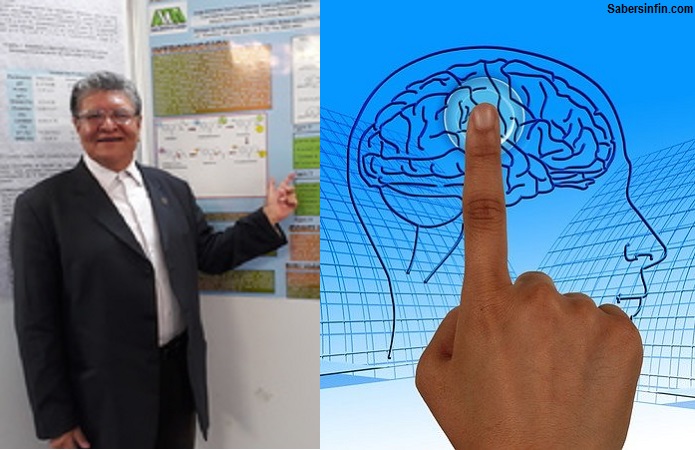
Por Enrique Canchola Martínez. Universidad Autónoma Metropolitana. Ciudad de México, México.
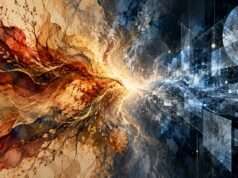
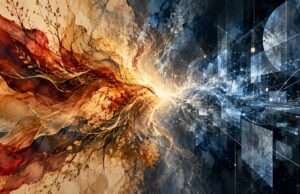
In the vast universe, light travels tirelessly through space and time, carrying with it the history of the cosmos. And like life itself, it is spent on the timeline according to the theory known as “tired light”. This theory was proposed by Swiss astronomer Fritz Zwicky in 1929. Where he suggests that, over time, light loses energy as it travels great distances. This loss of energy manifests itself in a redshift of the wavelength of light, a phenomenon where the wavelength of light lengthens, making it appear redder, more tired.
Journey of consciousness
Similarly, human consciousness can be seen as a journey through time and experience. Like light, our consciousness expands and evolves, accumulating knowledge and experiences. However, this process is not without wear and tear. As we travel in the universe, our ability to process information and remember details may decrease, reflecting a kind of mental “tiredness.”
The tired light theory was proposed to explain the redshift observed in distant galaxies without resorting to the expansion of the universe. In an analogous way, consciousness can be understood as a subjective, changing, intentional and continuous phenomenon that depends not only on neural activity, but also on constant overlap and intertwining with the environment and accumulated experiences.
Similarities between light and consciousness
Light, like consciousness, are enigmatic phenomena of science and philosophy, although they come from different fields, they share a common essence: transformation and wear and tear over time and space. Tired light reminds us that even photons, the smallest particles of light, are not immune to the passage of time and the forces of the universe. Likewise, human consciousness and thoughts, with all their complexity and depth, are subject to the changes and challenges that life brings.
These concepts and their profound similarities, both tired light and consciousness, invite us to reflect on our nature: we are luminous energy in space-time. They show us that, although the journey may be long and exhausting, each moment and each experience contributes to forming our changing consciousness and the vast neural network where the Qualia are built and which give the knowledge and existence that defines our universe and our own humanity.
 Enrique Canchola Martínez
Metropolitan Autonomous University
Mexico City, Mexico.